
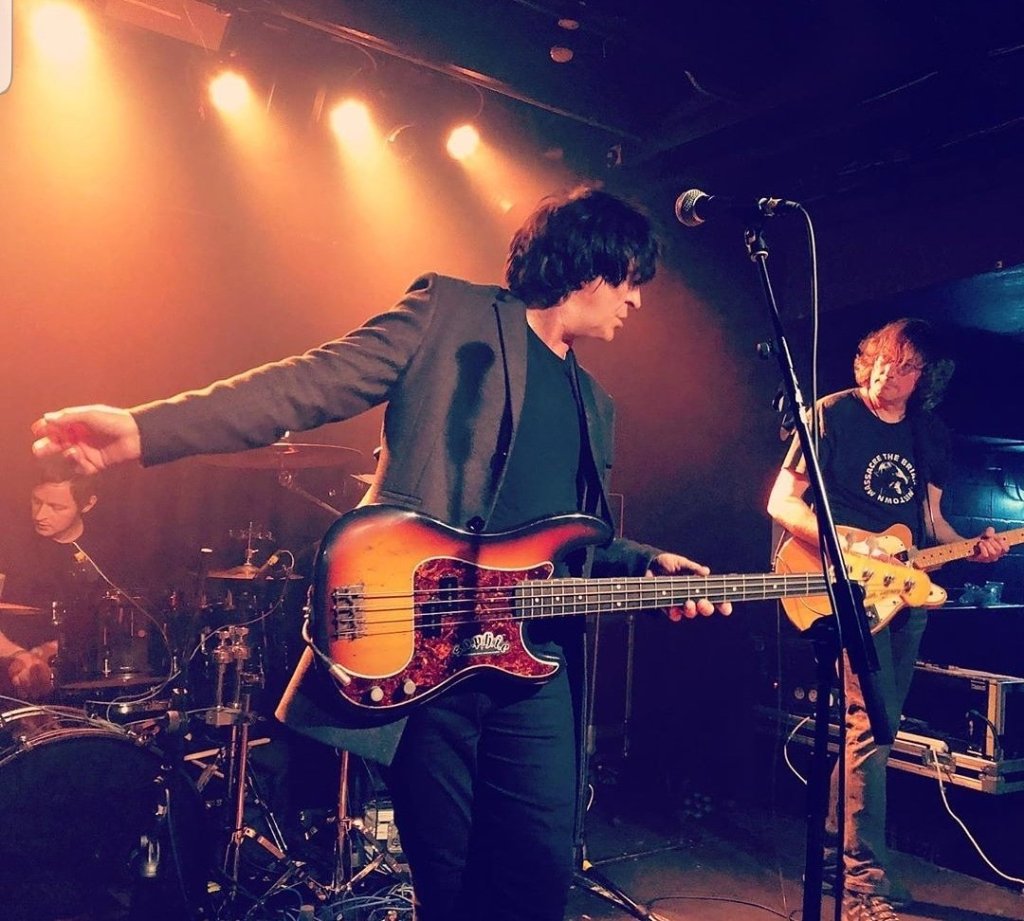
The Chameleons are the best unknown band to come out of the Manchester Music Scene. When pivotal bands such as The Fall, Buzzcocks and Joy Division were making ground, The Chameleons were building a loyal fanbase.
Whilst the band, fronted by Mark Burgess, were still popular within the region, their nationwide reach wasn’t as strong.
It was their punk attitude, atmospheric sound, introspective lyrics and melodic guitar lines, which made them a Mancunian favourite following a session with John Peel in 1981 that threw them into the limelight.
They continued to ammas a strong and loyal following, and upon their last release, Strange Times in 1986, they were tipped to hit the mainstream. However, 1987 would see the band break up, and the members go their respective ways.
Whilst reforming in 2000, it was short-lived after they split again three years later. With four studio albums now under their belt, Burgess and original drummer John Lever continued to perform their songs under the new project ChameleonsVox until Lever later left and subsequently passed away in 2017. Burgess and Smithies later reformed the Vox group in 2021.
In a career spanning four decades, the punk-pioneering band released six studio albums and an EP, along with many Peel sessions, live records and compilations, with the focal member being Burgess.
Chameleons Vox has allowed their older fans to revel in their old tracks, as well as, captivate new fans as they perform their back catalogue yearly for their Christmas shindig.
33-RPM caught up with Mark before their two homecoming shows at Manchester 02 Ritz.
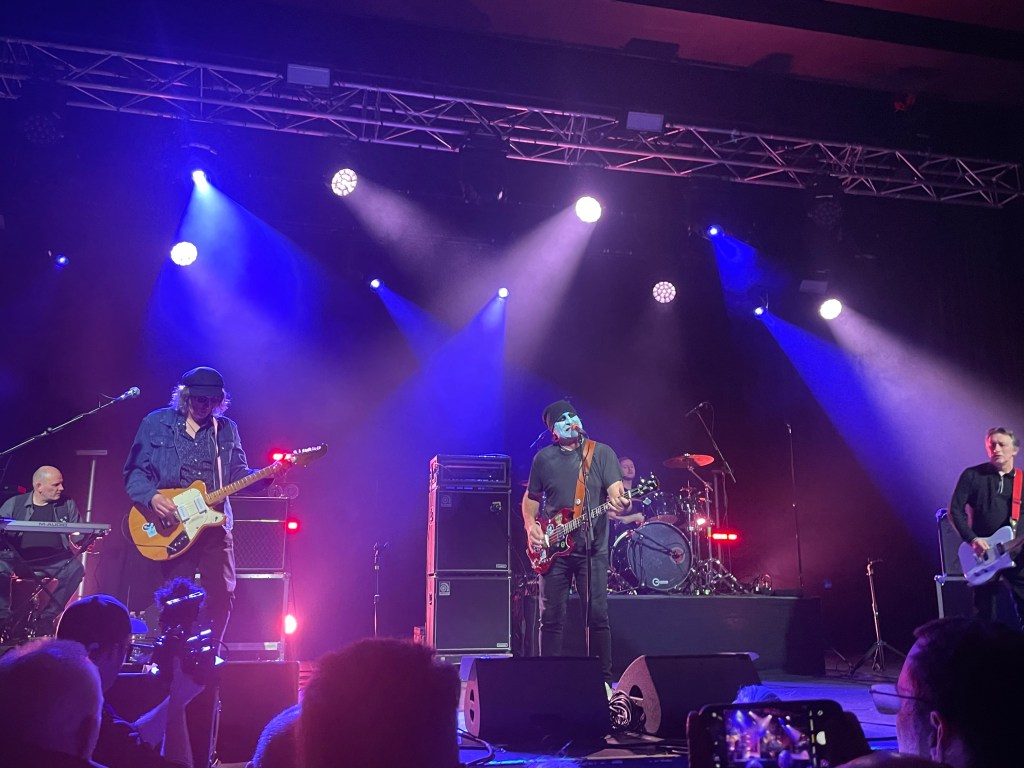
The Chameleons, fronted by Mark Burgess and the return of original guitarist Reg Smithies playing to the
Manchester home crowd at O2 Ritz
How does it feel to be back in Manchester with a doubleheader at the Ritz to a home crowd?
It’s always really good as it’s one of my favourite venues in Manchester. I love it there. The home crowd is great, it does tend to be a bit cosmopolitan when we do the Christmas shindig, as they tend to come from all over the place and converge. It’s more about the audience than the band. It’s like a tribal gathering.
But to be quite honest, I do think that this might be the last of them though, because we have been doing it for so long. Maybe the tenth next year will be the last one. John will be spinning in his grave if we don’t. He’ll be saying, ‘You can’t end it one nine!’
What can we expect ahead of this year’s show?
It’s going to be a straight-out performance. On the first night, we’re performing all the songs that were written between 81 and 83, and the night after, it’s songs written between 84 and 2001. It’s to tie it up because we’re going to start a new record in the new year. So I don’t want to say it’s a break from the past, but it’s tying a bow on it. It’s just going to be two great nights at the Ritz showing the history of The Chameleons.
What more can you tell us about the new music in the new year?
I can’t say much more because we’ve got basic sketches and ideas at the moment. We’re going to come into a studio in Manchester in the New Year, and we’re just going to start and see what we come out with.
Your sound in the 80s and 90s, even in your stage presence, is very punk. Is that something you’re looking to replicate in the new music?
I’ve always said when talking to people about punk, it’s about attitude. To me, it isn’t a particular sound, style, or the way you dress, it’s about attitude. And we’ve always had it, and we’ve still got it now. I don’t think that attitude will ever really go, and I don’t think we’ll ever change in that respect.
When you formed the Vox, it was with John Lever, who is sadly no longer with us. When you’re performing, do you have him in your mind, and how good is it to have Smithies back in the Vox?
It’s ace to have one of our writers back, it’s put everything on a completely different level for me. To have Smithies back is great.
Of course, we think of John all the time, and that’s always been kind of problematic for me to play this stuff without him because he’s a fucking tough act to follow. He’s such a powerhouse of a drummer, and apart from his personality, he was so powerful on the drums driving that music. It’s been daunting for anybody else to come in and try to do it. At one point, I was saying: ‘I don’t want to do it unless John is drumming’. I was persuaded otherwise, but it’s a tough act to follow. He’s always going to be in our minds.
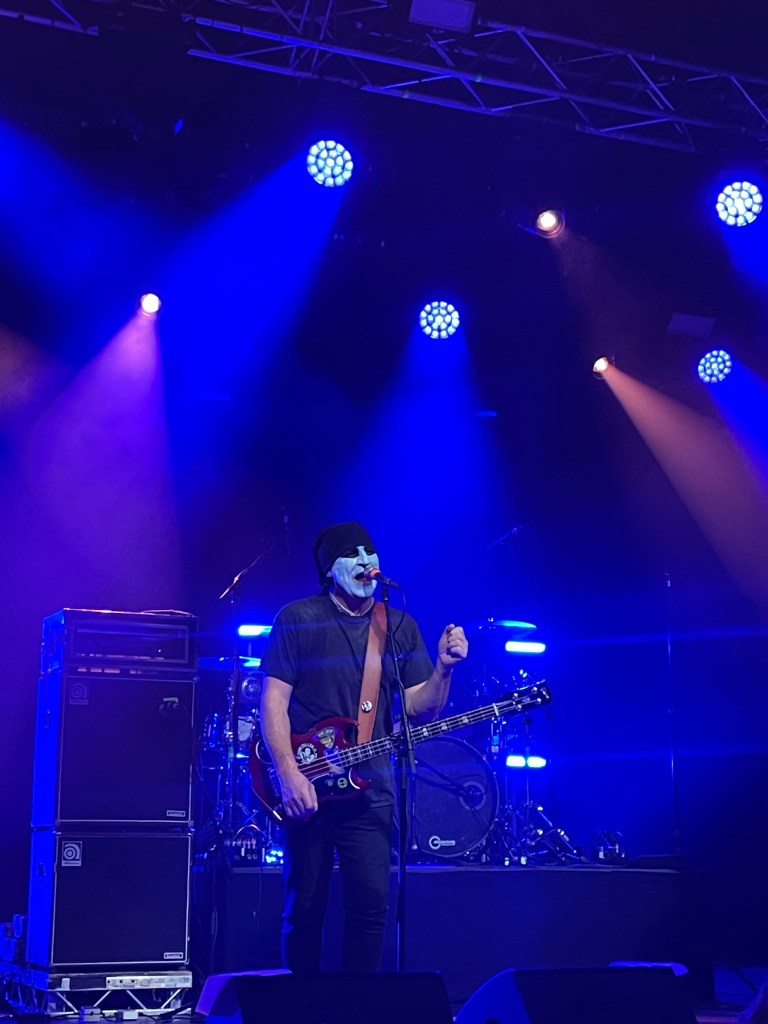
Mark Burgess with the album What Does Anything Mean? Basically painted on his face.
When recording the John Peel Sessions, how important was that for your career as a group and do we miss someone like John Peel in the modern music industry?
I think we do miss someone like that, as he had a massive impact. When the broadcast went out, literally overnight, our lives changed completely forever, and nothing was ever the same after that. The impact was huge.
So it was down to John that we got our break. And you’re right, no one who has carried that baton. When you think back on it, he started with two bands a day. So that’s six unheard unsigned bands a week on national radio and the only national radio station. That’s huge. So to have that exposure on Radio 1, with six new unsigned bands a week, is just incredible.
I remember being in the office with him one time, where he pointed at a cardboard box, and the box was about four feet high. This big square box was filled to the top with cassettes. And he said to me: ‘I will listen to every single one of those.’ When he played it, you had to grab his attention right away in the first 30 seconds or a minute. And he did find the time to listen to every single one of them, which is just amazing. He was a music facilitator. He brought music that wouldn’t have got a sniff to national radio.
The Chameleons played the Hacienda in 1983, how was it playing at the legendary Manchester club?
The sound in there was fucking dreadful. I’d seen bands in there like The Smiths, and the sound was always bad. It was a bit elitist for me. I only used to go, as I didn’t have to pay to get in because I knew Peter Hook, so he’d get me in. But our audience wasn’t the Hacienda crowd. The first time we played there, it was a local band night, and there were like 900 in there, and I remember the Hacienda guys, were like what the fuck is this? They were used to 40, 50 people in there. But on this night, there were 900 people, and they couldn’t fucking weigh it up.
I remember when we drove the van right into the club, and you loaded from where the dance floor ended, and inside was all this kind of motorway chic everywhere, and I remember thinking how impressive it looked. But sound-wise, fucking hell, it was awful.
How was it being around Manchester in the 80s and the 90s with so many great bands coming out of the region?
Manchester and London were always a good place for us, but everywhere else we struggled. We struggled to keep the music going, and we struggled to get people to come and hear us, but in Europe and America, it was different. I remember on the Strange Times tour in Newcastle, we had about 60 people.
Now, it’s a lot better for us, especially the last couple of years, as we’re getting so many young people coming to the shows who weren’t even born when we wrote this stuff, but they’re so passionate about it, which certainly makes it more enjoyable. I also think that the band is better than we ever were, we’re on fire at the moment.
Feature Image Accreditation: Tanya Malden
 33-RPM